The Socinians, Isaac Newton, and the One God
The Socinians weren't a scattering of private doubters muttering in corners. In early modern Poland–Lithuania, they built congregations, schools, a printing network, an academy, and an international intellectual movement around one stark claim: the Christian scriptures themselves teach one God, and Jesus as the Messiah sent by that God. Not an eternal divine person equal to the one who sent him.
They didn't claim to have another Gospel, or a revelation outside Christianity. They accepted the four Gospels that made it into the New Testament, the miraculous birth of Jesus, his miracles, his resurrection, and his authority as Messiah. To them, none of that required the later doctrine of an eternal Son made flesh.
Their challenge was aimed at how Christianity had learned to read its own sources. The language of "one substance," "eternal generation," "two natures," and "three equal persons" had taken shape centuries after Jesus. The Socinians argued that these later definitions had come to control the meaning of the Gospels, instead of emerging plainly out of them.
Some Socinian writers, and their successors, pushed the question further. Had later doctrine only shaped how Scripture got interpreted — or, in a small number of disputed passages, had it also helped shape the actual wording that later churches ended up receiving?
The questions didn't end with the Polish Brethren. They came back, by a different route and with a much wider documentary method, in the private theological work of Sir Isaac Newton.
The same physicist and mathematician who wrote the Principia and worked out the laws of motion and universal gravitation privately rejected the orthodox Trinity. He also poured an extraordinary part of his life into biblical manuscripts, ancient translations, early Christian writers, and the historical development of Church doctrine. [1]
The Polish Brethren and the Gospels
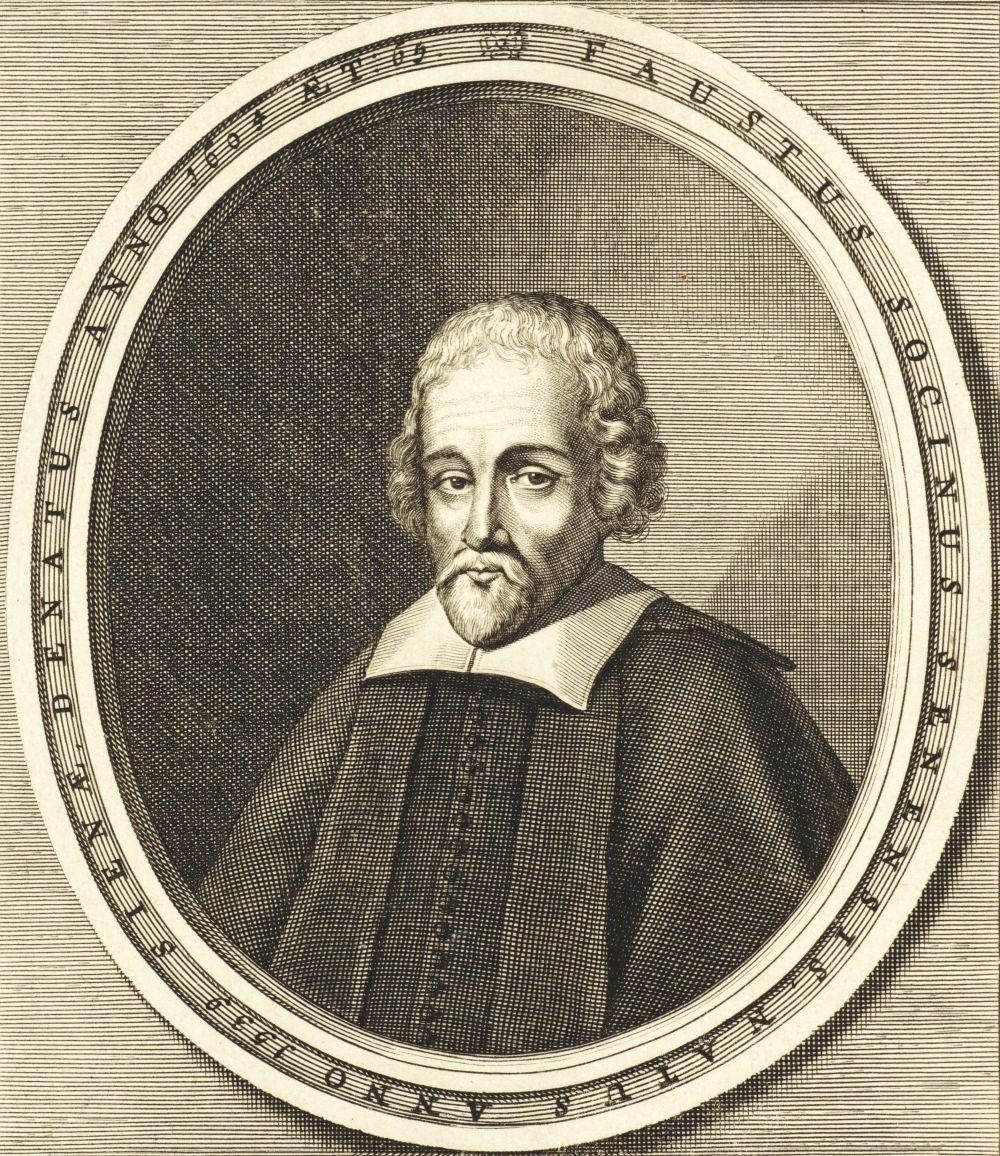
They Said It Came from Scripture Itself
The Polish Brethren grounded their central beliefs in the Christian scriptures. Read before the controlling definitions of later councils and creeds took over, they argued, those writings pointed toward one God, and toward Jesus as the Messiah whom God sent, raised, and exalted.
Their claim wasn't just that the established churches had picked the wrong theology. They believed that later theological language had come to stand between Christians and the ordinary, plain structure of the biblical text. So their whole case stood or fell, by their own account, on the words of Scripture itself.
For the early Socinians, reason didn't replace revelation. Scripture stayed the source of doctrine; reason was the tool used to examine its language, grammar, context, and apparent tensions. Calling a doctrine a "mystery" didn't exempt its interpretation from scrutiny.
That balance shifted later in the movement's history. A thinker named Andrew Wiszowaty gave reason a more independent role — treating it as the tribunal that competing interpretations of revelation should be tested against.
The early Racovian appeal to Scripture, and the later Socinian appeal to reason, belonged to the same intellectual movement — but they weren't identical. [1][2]
The God Jesus Called His God
Their theology didn't rest on one isolated verse. It rested on a relationship that repeats throughout the Gospels.
Jesus affirms that God is one. He prays to God, obeys God, and describes himself as the one sent by God. His teaching belongs to the one who sent him. His authority is given to him. He says he can do nothing by himself, that God has knowledge he doesn't have, and that God is greater than he is.
After the resurrection, he keeps speaking of "my God and your God."
The Socinians drew particular attention to passages like these:
- Mark 12:28–34 — Jesus affirms Israel's confession that God is one. - Matthew 4:10 — worship and service belong to God. - Matthew 12:18 — Jesus is God's chosen servant, on whom God places the spirit. - Mark 13:32 — God has knowledge the Son doesn't have. - Matthew 28:18 — all authority is given to Jesus. - John 5:19–30 — Jesus can do nothing independently, and receives life and authority. - John 7:16 — his teaching isn't his own; it belongs to the one who sent him. - John 14:28 — God is greater than Jesus. - John 17:3 — Jesus distinguishes "the only true God" from the Messiah who was sent. - John 20:17 — the risen Jesus speaks of "my God and your God."
Their argument was cumulative — meaning it built up piece by piece.
A figure who worships God, is sent by God, receives teaching and authority from God, and keeps calling someone else his God — that figure can't simply be identified with the same God who sends and empowers him. [3]
Miraculously Born, Yet Truly Human
The Socinians accepted the virgin birth. They didn't think of Jesus as an ordinary man who just happened to become a religious teacher.
He came into existence through a unique act of God, lived without sin, was appointed as Messiah, attested by miracles, raised from death, and exalted above every human authority.
And yet they denied that an eternal divine person had entered Mary's womb and taken on a second nature. Jesus's personal existence, in their view, began within history — it didn't stretch back before that.
Their position differed from both Nicene and Arian theology here. Nicene doctrine taught an eternal Son, equal to and made of the same substance as God. Arius (a priest whose views were condemned at Nicaea) taught a heavenly Son created before the visible universe. The mature Socinian position rejected both of these versions of "pre-existence" (the idea that Christ existed, in some form, before his human birth).
A miraculous birth showed God's direct action, and Jesus's unique mission. It didn't, in their reading, make the one whom God brought into existence identical with the God who brought him into being. [3]
How They Read the Difficult Gospel Passages
The Socinians didn't preserve their strict monotheism (belief in one God) by deleting every passage used against them. In most cases, they accepted the wording and disputed the meaning later attached to it. Five famous passages show the method at work.
"The Word Was God"
The Racovian Catechism (the Socinians' core statement of belief) understood "the beginning" in John's opening line as the beginning of the Gospel's preaching, not the beginning of the universe. It pointed out that before describing Jesus's public mission, each Gospel introduces the appearance and preaching of John the Baptist.
On this reading, Jesus is called "the Word" because God's message of life was entrusted to him and revealed through him. "The Word was with God" preserves a distinction between the two, while "the Word was God" describes the divine authority of the office given to Jesus, rather than identifying him as the one God.
This is a distinctive interpretation — not one every reader will find naturally required by the passage.
Its historical importance lies somewhere else: the Socinians didn't think John's opening necessarily taught the later Nicene doctrine. [4]
"Before Abraham Was, I Am"
John 8:58 needed a more difficult answer.
The Catechism connected "I am" to Jesus's earlier declaration in that same chapter: "I am the light of the world." It then linked Abraham's name — "father of many nations" — to the promise that people from many nations would eventually share Abraham's faith through the Messiah's work.
Its reading went roughly like this: before Abraham became the father of many nations, Jesus already stood as the light through whom that promise would be fulfilled. The verse was about the priority of his Messianic role, not a personal life stretching back before Abraham existed.
This is one of the Catechism's more linguistically demanding interpretations. It's worth presenting as its own precise historical answer, not as though the wording forces every reader to land there. [4]
"I and the Father Are One"
The Socinians understood John 10:30 as unity of action, authority, and purpose — not unity of substance.
They compared it with John 17, where Jesus prays that his disciples might also become "one" as he and God are one. Whatever unity was being asked for the disciples, it couldn't mean they'd become a single divine being. [5]
"My Lord and My God"
The Catechism's main answer didn't require denying that Thomas was actually addressing Jesus.
Thomas stood in front of the man who had been wounded, had died, and had been raised. The title "God," the Catechism argued, could be applied to Jesus as a title of granted authority, without identifying him as the one God.
The scene itself was part of the answer. Wounds, death, and being restored to life described a human being that God had acted upon.
A later annotation preserved a different interpretation, associated with some Nestorian writers: Thomas may simply have been exclaiming in praise of the God who had raised Jesus.
This wasn't the Catechism's main answer, though. [5]
The Baptismal Formula
The Racovian Catechism didn't reject Matthew 28:19 as a later addition.
It argued instead that naming God, the Son, and the Holy Spirit together didn't establish three equal, co-eternal persons within one divine essence. The formula expressed a relationship to the three; it didn't define their metaphysical nature (their deeper being) or declare them to be one God. [5]
Could the Received Text Itself Have Changed?
By the "received text," these writers meant the biblical wording that was commonly copied, printed, and read in the churches of their own time.
The Catechism and Its Later Layers
The work now known in English as The Racovian Catechism actually preserves more than one historical layer.
The original Catechism appeared in Polish in 1605, followed by a Latin version in 1609. Later Socinian scholars proposed corrections, clarifications, and replies to objections. Expanded editions published in 1665 and 1681 added revisions and annotations associated with figures like Martin Ruar, Jonasz Schlichting, Andrew Wiszowaty, and Benedict Wiszowaty.
Thomas Rees's English translation of 1818 reproduced this later, developed form of the work, and added his own historical and textual notes on top.
This distinction matters.
An argument in the Catechism's main question-and-answer text belongs to its early doctrinal tradition. A stronger accusation found only in a signed, later note belongs to that specific annotator. A judgment added by Rees in 1818 reflects a still later stage of textual scholarship.
A disputed reading, a later correction, and an accusation of deliberate fraud are three different claims. [6]
How an Explanation Could Enter the Text
Questioning a disputed reading didn't require believing that an entire Gospel or letter had been rewritten wholesale.
Ancient books were copied by hand. Readers, teachers, and copyists sometimes wrote explanations, alternative readings, or phrases used in worship right beside the main text. A later copyist might read a note like that as commentary, as a correction, or as words an earlier scribe had accidentally left out.
If that third explanation was accepted, the note could migrate into the body of the next copy. Repeated copying then gave the expanded reading an increasingly ancient-looking pedigree. Once it was quoted by theologians, used in worship, or printed in an influential edition, challenging it could start to feel like challenging Scripture itself.
The Three Heavenly Witnesses
The clearest example was 1 John 5:7–8.
A longer form of the passage spoke of three witnesses in heaven — "the Father, the Word, and the Holy Spirit" — and declared that the three were one. It offered an unusually direct, explicit verbal formula for the Trinity.
The Racovian Catechism pointed out that these words were missing from most older Greek copies, and from several ancient translations. It also noted that even scholars who accepted the Trinity had questioned whether this passage was authentic.
Its answer had two parts. First, the wording itself was textually doubtful. Second, even if the words were kept, three witnesses being "one" in their testimony wouldn't prove they were three persons sharing one divine substance — the spirit, water, and blood were also said, right nearby, to "agree as one."
A later note in Rees's edition went further. Rees reproduced an accusation that the "heavenly" clause had first shown up in writings associated with a figure named Vigilius Tapsensis, and had been introduced specifically to support later doctrine. That accusation belongs to the nineteenth-century editorial layer — not to the original authors of the 1605 Catechism.
Modern critical editions of the Greek New Testament don't print the "heavenly witnesses" clause as part of the earliest recoverable text. So the Socinian objection here was historically early — but it's no longer unique to Socinian theology; mainstream textual scholarship agrees with it now. [7]
Newton later tried to reconstruct the whole history of this same passage using a much wider collection of evidence.
How a Small Mark Could Turn "Who" into "God"
A second major dispute concerned 1 Timothy 3:16.
One reading stated:
God was manifested in the flesh.
Other ancient copies preserved a relative pronoun instead:
who was manifested in the flesh;
or:
which was manifested in the flesh.
In Greek capital writing, "who" could appear as OC or ΟΣ. "God" was commonly abbreviated as a sacred name, ΘC or ΘΣ, usually with a line above the abbreviation.
The visible difference, in other words, could be extremely small. A short stroke through the circular first letter could make O resemble Θ. If the abbreviation-mark above the letters was present, had faded, or was later re-drawn more heavily, a reading that meant "who" could end up looking like the abbreviated form of "God."
Not every manuscript was altered by one identical stroke — handwriting and the physical condition of each copy differed. But the narrower observation stands on its own: a small graphical change, at one strategically important word, could turn a relative clause into an explicit statement that God had appeared in human flesh.
The Catechism challenged the word "God" here by appealing to ancient translations and Christian writers who didn't seem to have it in their texts. Modern critical editions likewise prefer the relative-pronoun reading today.
A later annotation signed by Andrew Wiszowaty repeated an older accusation, passed down through a writer named Liberatus, that a bishop named Macedonius of Constantinople had deliberately altered the passage.
That specific charge has to stay attributed to where it came from. Evidence that an earlier text contained a pronoun doesn't, by itself, identify who first changed it, or prove what that person's intentions were. [8]
Newton took up this same disputed word later, but his attention moved beyond just the shape of the letters. He compared translations, commentaries, doctrinal controversies, and reported corrections in specific manuscripts.
From Congregations to an Intellectual Centre
The Polish Brethren formed congregations, trained ministers, educated children, printed books, and built institutions capable of carrying their ideas far beyond the estates and towns where the movement began.
The surviving records are incomplete, but a historian named Earl Morse Wilbur estimated that at least 125 Socinian congregations may have been founded in Poland over the movement's entire organized existence.
That's a cumulative estimate across their whole history in the country — not necessarily the number active at any one moment.
Most were rural or village communities, set up on the estates of sympathetic nobles. Ministers often served both the patron's household and the surrounding congregation.
Communities in bigger towns also included merchants, artisans, professionals, laborers, and members of the lesser nobility.
They founded schools in several regions. At Raków specifically, they set up an academy and a major printing center.
The academy didn't just educate the movement's own children. Calvinist and Catholic families sent pupils too, and foreign students arrived from other parts of Europe; in all, it trained more than a thousand students. The Raków press produced hundreds of titles and reprints, and those books carried Socinian arguments across Europe long after the movement's institutions in Poland had been destroyed.
So the Polish Brethren weren't a theological footnote. They were a visible religious, educational, and intellectual force in their own right. Forces that visible get noticed. [9]
Suppression, Punishment and Exile
What followed wasn't one sudden decree, and it wasn't just a quiet expulsion either. It was the gradual dismantling of a living religious and intellectual community, in full public view.
Opposition to the Polish Brethren didn't come from the Vatican acting alone. It built up through the wider Catholic Counter-Reformation: Jesuit teachers and controversialists, bishops and local clergy, Catholic nobles, royal influence, courts, and the Polish parliament (the Sejm).
The conflict started through schools, preaching, printed refutations, and public controversy. It gradually turned legal and coercive.
In 1638, the academy, church, and printing center at Raków were suppressed. Teachers and ministers were driven away.
The town that had trained a thousand students went quiet.
Elsewhere, courts ordered churches and schools closed, commanded buildings burned, banished ministers, imposed heavy fines, and declared some patrons "infamous" or stripped of rank.
The final measure came in 1658. The Polish Brethren were ordered to either renounce their religion or leave the country. Staying and continuing to practice openly exposed them to confiscation, and the threatened penalty of death.
Their schools, presses, congregations, property, and public presence were all deliberately broken apart.
In individual cases, persecution ended in execution.
Iwan Tyszkiewicz, an active Socinian from Bielsk, was put to death in Warsaw in 1611 after a civic dispute was turned into a prosecution for heresy. He had refused to swear an oath on the crucifix or by the Trinity, offering instead to swear by God and Christ.
Wilbur later described him as the first martyr of historical Unitarianism (the belief that God is one single person, not three). [10]
For many poorer members, exile was hardly a free choice. Some outwardly converted, or hid their beliefs. Others abandoned their homes entirely and scattered across Europe.
One large group traveled toward Transylvania. After robbery, hunger, exposure, and disease, roughly three hundred people made it to Kolozsvár.
Other groups settled in Silesia, Prussia, Brandenburg, the Netherlands, and several German territories.
Their institutions in Poland were broken — but exile carried their books, scholars, and questions into other parts of Europe. The attempt to destroy the movement helped spread its intellectual inheritance. [10]
Isaac Newton and the Evidence
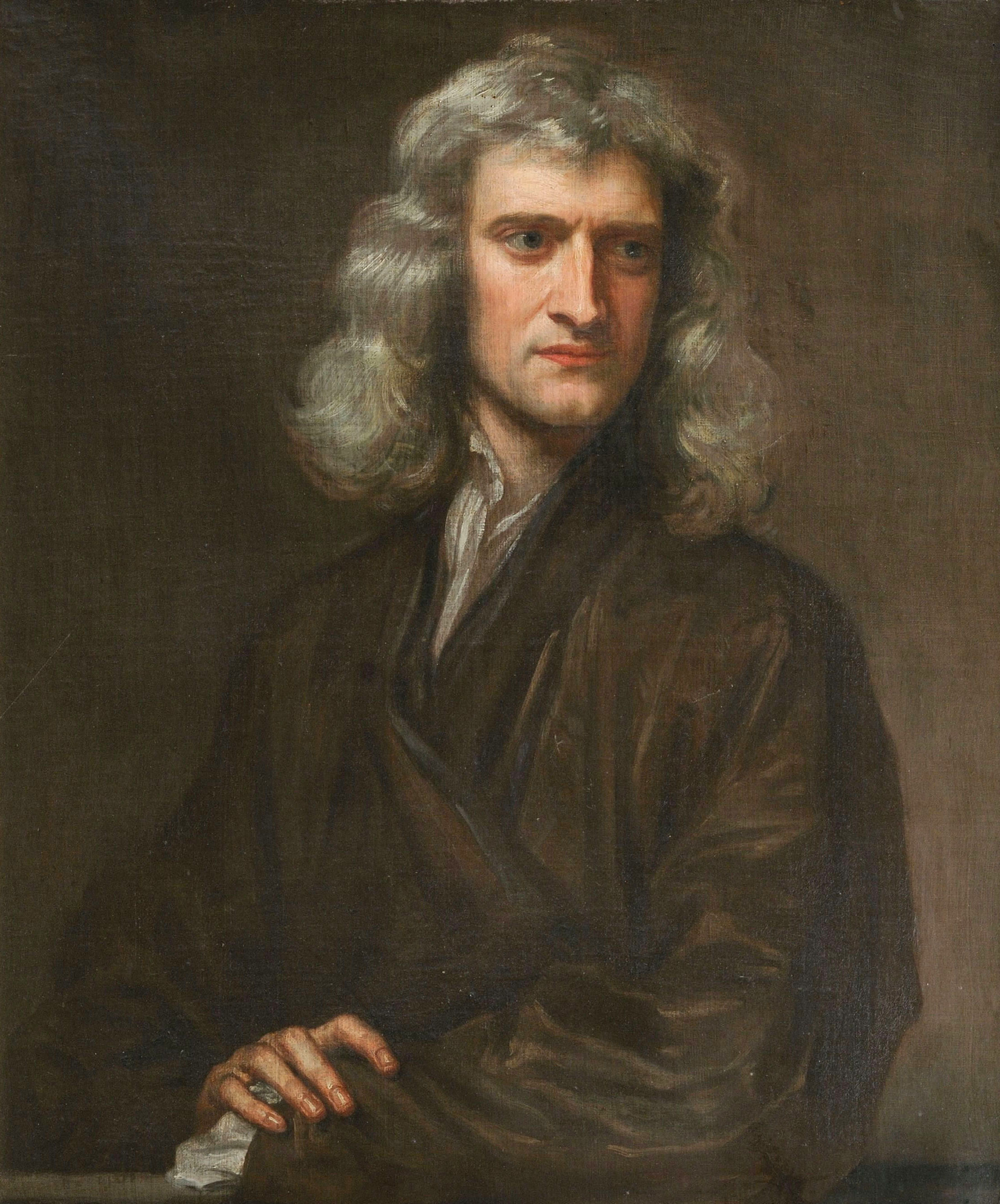
The questions the Socinians raised didn't disappear along with the destruction of Raków, or the exile of the Polish Brethren.
They came back in a different setting, and this time almost entirely in private.
What Newton Himself Believed
Newton's investigation of biblical manuscripts wasn't a detached hobby. By the late 1670s, he had concluded that the orthodox doctrine of the Trinity didn't represent the faith actually taught by Jesus and the earliest Christians.
In one private summary of his beliefs, Newton wrote:
"We are to worship the Father alone as God Almighty."
Newton didn't reject Jesus. He saw him as the Son of God, the Messiah, the Lord and ruler appointed by God. But he didn't identify Jesus with the supreme God, or treat him as an equal, co-eternal person sharing one divine essence.
God sends, appoints, gives authority, and exalts. Jesus is sent, appointed, given authority, and exalted.
Newton differed from mature Socinianism in one important way: he appears to have accepted some form of the Son's existence before Jesus's earthly life. So he can't simply be labeled a Socinian.
The connection explored here is convergence (two paths arriving at a similar place independently), not identity.
But on the central Nicene question, Newton's conclusion was clear: Jesus was not equal to the one supreme God. [11]
The Words of Scripture Before Later Formulas
Newton believed the essential Christian faith should be expressed in the language used by Jesus and the apostles. He wrote that its first principles rested not on "disputable conclusions" or human opinions, but on "the express words of Christ and his Apostles."
Councils and creeds, in his view, could be examined — and could be mistaken. A theological formula shouldn't be treated as necessary for salvation just because a church or council had authorized it; it first had to be shown to actually come from Scripture.
Here, Newton was tackling the same central question the Polish Brethren had raised: should later formulas determine what Scripture means, or should those formulas themselves be tested against Scripture's own language? [12]
How Newton Worked
Newton moved between manuscripts, old translations, quotations inside early Christian writings, records of councils and doctrinal disputes, and the first printed Greek New Testaments. He paid close attention to places where a marginal note, a correction, or a later scribal hand might still be detected.
He also asked a practical historical question: if a disputed sentence had existed in early copies, did the theologians who most needed that sentence appear to know it and use it?
His best-known textual study, An Historical Account of Two Notable Corruptions of Scripture, took the form of two letters sent to John Locke in November 1690. Its subjects were the two passages already challenged inside the Racovian tradition: 1 John 5:7 and 1 Timothy 3:16. Newton then drew back from publishing them, and the work reached print only in 1754, long after his death. [13]
The caution wasn't abstract. His successor in the Cambridge chair, William Whiston, was expelled for defending openly the kind of conclusions Newton kept in private manuscripts.
Newton and the Heavenly Witnesses
The wording here, and its theological importance, have already been described above. Newton's contribution was the sheer breadth of the documentary history he pulled together.
He compared Greek manuscripts against early Latin, Syriac, Ethiopic, and other translations. Then he examined the fourth- and fifth-century controversies where Christian writers gathered up biblical arguments for the Trinity. An explicit statement about three heavenly witnesses would have been an exceptionally useful thing to cite — and yet it's absent from their arguments. That absence speaks.
A church father named Cyprian presented a possible complication, since he had written about the three being "one." Newton didn't just dismiss Cyprian's words as a forgery. Instead, he concluded that Cyprian had been interpreting the original earthly witnesses — the spirit, water, and blood — as symbols of the Trinity.
That interpretation, Newton believed, offered a plausible starting point for the longer reading. A theological explanation could first accompany the passage as commentary, then be written in the margin, and eventually be copied straight into the text itself.
He traced the clause through the medieval Latin tradition and into the first printed Greek New Testaments. A scholar named Erasmus left it out of his first editions because he couldn't find it in his Greek manuscripts. He later printed it anyway, after controversy and the appearance of a late Greek copy that happened to contain it.
Newton suspected that this late Greek copy had itself been influenced by the Latin tradition, rather than the other way around.
His proposed route looked like this:
interpretation → marginal note → Latin manuscript text → printed Greek Bible
So Newton supplied a detailed historical reconstruction for an objection the Racovian tradition had already raised on textual and interpretive grounds alone. [14]
Newton and the Disputed Word in 1 Timothy
The small graphical difference described earlier became, in Newton's hands, a much wider historical investigation.
He compared old Latin, Syriac, and Ethiopic translations, which he believed reflected a pronoun rather than the word "God." He examined a commentary by John Chrysostom and argued that its explanation didn't treat "God" as the subject of the sentence.
Newton also studied the dispute between the bishops Nestorius and Cyril of Alexandria. Cyril had to argue that the pronoun referred to the divine Word. Newton reasoned that an argument like that would have been unnecessary if the text had already explicitly stated that "God was manifested in the flesh."
Then he turned to physical manuscript evidence. One important example was Codex Claromontanus, an early Greek–Latin manuscript of Paul's letters. Newton didn't inspect it himself — he relied on a report from a scholar named Jean Morin, who said an earlier reading had been altered by a different hand, in different ink.
Modern critical apparatus (the scholarly notes tracking manuscript variants) likewise distinguishes the original hand of this manuscript from a later correction supporting the reading "God." So the manuscript does supply a real, physical example of one copy's wording being changed.
It doesn't, by itself, prove exactly when that reading first arose, or why the corrector changed it. Newton's attempt to connect the original alteration to Macedonius remained a historical reconstruction — a plausible guess, not a documented fact. [15]
Other Gospel Passages Newton Examined
Newton didn't limit his inquiry to the two passages named in his famous study.
"Nor the Son" — Matthew 24:36
Mark 13:32 preserves the saying in a clear form:
"No one knows about that day or hour—not even the angels in heaven, nor the Son, but only the Father."
That sentence states plainly that Jesus doesn't possess knowledge that belongs to God.
Matthew contains a parallel version. Some ancient copies include "nor the Son"; others leave the words out entirely. The difference still shows up in Bible translations today.
Newton believed Matthew originally contained the words, just as Mark still does. He cited early Christian writers who knew the longer form, and argued it was shortened later because it created a problem for the developing belief that Jesus possessed the same knowledge as God.
Only three words were involved, but removing them changed the whole force of the sentence. With them, Jesus is explicitly included among those who don't know. Without them, the stated limitation applies only to humans and angels.
The earliest wording of Matthew here remains an open question in textual criticism (the scholarly practice of comparing manuscripts to reconstruct the most likely original wording). Newton regarded the shorter form as a weakened version of a Gospel statement that distinguished Jesus from God. [16]
"Why Do You Call Me Good?" — Matthew 19:17
In Mark and Luke, a man addresses Jesus as "Good Teacher." Jesus replies:
"Why do you call me good? No one is good except God alone."
Ancient copies of Matthew preserve two forms of this exchange. Some contain a similar reply. Others read:
"Why do you ask me about what is good? There is only one who is good."
Newton believed Matthew originally agreed with Mark and Luke here. He pointed to ancient translations and early Christian writers who knew the wording "Why do you call me good?"
The first version responds directly to a description applied to Jesus, and distinguishes him from God. The second moves the question away from Jesus personally, turning it into a more abstract discussion of what "good" even means.
Newton concluded that Matthew's wording had been changed during early disputes over Jesus's status. The original form of Matthew remains debated, while the first reading still stands plainly in Mark and Luke. [16]
Jesus Wept over Jerusalem — Luke 19:41
Luke says that as Jesus approached Jerusalem and saw the city, he wept over it.
Newton cited a church father named Epiphanius, who acknowledged that the words appeared in copies he described as "uncorrected." According to the explanation Newton preserved, some Christians removed the passage because the tears seemed to show a human weakness that didn't fit their understanding of Jesus.
With the words present, the Gospel shows Jesus grieving openly. Removing them takes away one of Luke's clearest pictures of his human emotion.
Newton treated this variant as another example of a passage about Jesus's humanity being weakened during doctrinal controversy. [16]
The Angel and the Agony — Luke 22:43–44
Some copies of Luke include a scene where an angel appears and strengthens Jesus. In deep anguish, he prays more earnestly, and his sweat falls like drops of blood.
Other ancient copies leave the scene out entirely.
Newton knew that early Christian writers were familiar with both versions. He considered whether the verses had been removed because they seemed to show too much human weakness — but he didn't reach a final verdict on this one. He left open the possibility that they'd instead been added to some copies, rather than removed from others.
Here Newton's caution is as important as the variant itself. The passage remains a subject of modern textual debate. [16]
An Added Phrase in John 3:6
John 3:6 normally reads:
"What is born of the flesh is flesh, and what is born of the Spirit is spirit."
Some Latin church texts expanded the sentence:
"…what is born of the Spirit is spirit, because God is spirit."
A church father named Ambrose accused his opponents of removing those final words. Newton reached the opposite conclusion. Since the phrase was missing from the Greek manuscripts and ancient translations he examined, he argued it had actually been added within part of the Latin tradition.
Without the addition, Jesus is simply contrasting physical birth with spiritual rebirth. With it, the verse could be used as a direct statement that the Spirit is God. [16]
Newton Did Not Accept Every Claim of Corruption
Newton also looked into a claim about 1 John 4:3. Some early writers alleged that an unusual sentence had been removed from the Greek text.
He rejected this accusation. In his judgment, the surviving Greek manuscripts, ancient translations, and early Christian writers supported the familiar reading, not the unusual Latin form.
This matters, because it shows Newton wasn't simply collecting every allegation that happened to be useful to an anti-Trinitarian position. He weighed the evidence on its own terms, and he was willing to reject a corruption claim when he thought the evidence didn't support it. [17]
Beyond the Socinians
The objection to Nicene equality didn't belong to one country, one century, or one theological school.
Many prominent figures who helped shape modern Western thought, science, literature, and the arts rejected or questioned the Nicene doctrine of the Trinity.
They didn't all share a single theology.
Some stayed committed to Scripture as their whole method. Some accepted a subordinate heavenly Son. Some regarded Jesus as wholly human. Others questioned much more of traditional Christianity.
Their lives don't add up to one continuous movement, and fame doesn't make a theology correct.
What they show is something narrower, but still historically important: resistance to the Nicene formula kept arising, again and again, through different and often independent routes.
Newton is the central example on this page. Other notable cases include:
Reformers, Biblical Critics and Theologians
- Michael Servetus — attacked the traditional Trinity as unscriptural and was executed for heresy. [18] - Ferenc Dávid — placed the unity of God at the center of the Transylvanian Unitarian movement. [19] - John Biddle — argued from the New Testament against the Trinity and was repeatedly imprisoned for his writings. [20] - John Milton — is commonly understood to have placed the Son below the one God, although the authorship and final form of his main theological treatise remain debated. [21] - William Whiston — Newton's successor at Cambridge, expelled after openly defending an anti-Nicene understanding of Jesus. [22] - Samuel Clarke — collected and classified the relevant New Testament passages and rejected the equality expressed in later Trinitarian formulas. [23] - Thomas Emlyn — rejected the equality of Jesus with God and was imprisoned and fined for publishing his conclusion. [24] - Joseph Priestley — defended a fully human Jesus and wrote extensively about what he saw as later corruptions of Christianity. [25] - William Ellery Channing — gave public, influential voice to American Unitarian Christianity in his Baltimore sermon of 1819. [26]
Philosophers and Public Figures
- John Locke — left the Trinity out of his account of the beliefs required for Christian salvation. His private notes point toward a heterodox (non-standard), non-Trinitarian position, although he avoided an explicit public denial. [27] - Benjamin Franklin — affirmed belief in one God and openly acknowledged doubts about the divinity of Jesus, without claiming certainty either way. [28] - Thomas Jefferson — rejected the Trinity and the deity of Jesus, while also rejecting several supernatural beliefs that the Socinians themselves still held onto. [29] - John Adams — described himself as a Unitarian and treated the idea of an incarnate, self-existent God with open skepticism in his private letters. [30]
This pattern wasn't confined to Europe and North America:
- Rammohun Roy — defended one supreme God, disputed Trinitarian readings of the Gospels, and helped establish the Calcutta Unitarian Committee. [31]
Writers and Composers
- Johann Wolfgang von Goethe — was recorded by a companion, Eckermann, as objecting to a doctrine that required him to accept that three were one and one were three. [32] - Leo Tolstoy — rejected the Trinity and the deity of Jesus, placing the moral teaching of Jesus above later Church doctrine. [33] - Edvard Grieg — explicitly described his mature religious outlook as Unitarian. [34] - Béla Bartók — formally joined the Hungarian Unitarian Church. [35] - Ludwig van Beethoven — was judged by his principal early biographer to have rejected Trinitarian dogma, although no equally explicit personal declaration from Beethoven himself survives. [36]
What these lives show is that the questions raised at Raków outlived Raków. They came back in different countries, through different methods, among people who didn't always know they belonged to the same historical line.
Conclusion
The Socinians believed that the distinction between God and Jesus came from the Christian scriptures themselves.
They accepted the miraculous birth, miracles, resurrection, and authority of Jesus, while denying that any of this made him the eternal God who had sent him.
Their challenge was about more than just one doctrine.
They questioned whether later creeds had become the lens through which the Gospels were read. And at a few important passages, they and their successors also asked whether doctrine had influenced the wording transmitted through manuscripts and translations.
Newton pursued several of these same questions through a much wider examination of ancient versions, early Christian writers, doctrinal controversies, manuscripts, and printed editions.
The claim was never that the New Testament had been rewritten wholesale.
Later doctrine could affect a text in quieter ways than that. An explanation might slide from the margin into the body of a manuscript. A preferred variant might push out a more difficult one. A brief phrase might disappear. A few pen strokes might turn a pronoun into a divine title.
For the Socinian tradition, and for Newton, the search moved in two directions at once: back to the repeated language of Jesus himself, and back through the manuscript history of the passages later used to qualify that language.
Seen against this history, the Gospel of Barnabas no longer looks intellectually isolated.
That doesn't establish a direct line of descent between Barnabas, the Polish Brethren, and Newton. It places the Gospel beside a recurring Christian argument: that Jesus should be distinguished from the one God who sent him, and that later doctrinal formulas have to be tested against both the language and the textual history of Scripture.
The history of the Trinity was, in their view, never just a history of theology.
It was also a history of texts, interpretation, institutions, and the authority to decide which reading would be accepted as the original one.
Source Notes
[1] General Socinian approach: The Racovian Catechism, trans. Thomas Rees (1818); Earl Morse Wilbur, A History of Unitarianism, vol. I, especially chapters XXXI–XXXII; and Francesco Quatrini’s modern treatment of the Polish Brethren as a Scripture-centred, anti-Trinitarian movement within the Radical Reformation.
[2] Early scripturalism and the later emphasis on reason: Wilbur, vol. I, chapter XLIV, especially his distinction between Socinus and the first Catechism on the one hand and Andrew Wiszowaty on the other. For the movement’s discipline and institutional life, see also Kazimierz Bem’s 2024 study.
[3] Socinian Christology and the virgin birth: the principal sections of the Racovian Catechism on the person and offices of Jesus; Wilbur, vol. I, chapter XXXI. Wilbur also stresses that the Catechism defends its positions through extensive scriptural citation and lexical, grammatical, and contextual argument.
[4] John 1:1 and 8:58: Racovian Catechism, Rees edition, approximately pp. 63–70. These pages explain “the beginning,” “the Word,” Abraham’s name, and the connection with “the light of the world” within the Catechism’s own question-and-answer sequence.
[5] John 10:30, 20:28, and Matthew 28:19: Racovian Catechism, approximately pp. 38–45 for the baptismal formula and pp. 127–128 for Thomas’s words. The main answer must be distinguished from the later note preserving a Nestorian interpretation.
[6] Historical layers of the Catechism: the first Polish edition of 1605, the Latin edition of 1609, the expanded editions of 1665 and 1681, and the preface to Rees’s 1818 English edition. Wilbur notes that the later form grew by more than half and incorporated material associated with Ruar, Schlichting, and Wiszowaty.
[7] 1 John 5:7–8: Racovian Catechism, approximately pp. 39–42; Isaac Newton, An Historical Account of Two Notable Corruptions of Scripture; and modern manuscript studies of the Johannine Comma. Newton examines both ancient versions and the silence of early Christian writers.
[8] 1 Timothy 3:16: Racovian Catechism, approximately pp. 121–122; Andrew Wiszowaty’s note transmitting through Liberatus the accusation against Macedonius; Newton’s study of the same verse; and the apparatuses of current critical Greek editions. Newton’s discussion of Codex Claromontanus, Chrysostom, Cyril, and Nestorius is set out in detail in his text.
[9] Congregations, schools, and Raków: Wilbur, vol. I, chapter XXXII—on the incompleteness of the surviving list of seventy-three congregations, his estimate of at least 125 over the movement’s full Polish history, the rural and estate-based structure, and the Raków school and press. Modern research likewise treats the Polish Brethren as an organised church community rather than a small circle of theologians.
[10] Suppression and exile: Wilbur, vol. I, chapters XXXIII–XXXVII, including the closure of Raków in 1638, court penalties, the burning of buildings, heavy fines, the exile decree of 1658, and the Transylvanian company. For Iwan Tyszkiewicz’s 1611 execution, see Wilbur, vol. I, pp. 444–447, and his description of Tyszkiewicz as the first martyr of historical Unitarianism. Bem’s work is also useful on institutional continuity in exile.
[11] Newton’s personal belief: Newton, Twelve Articles on Religion, and the Newton Project’s introduction to his theological manuscripts. “We are to worship the Father alone as God Almighty” comes from Newton’s own summary of belief.
[12] Scripture and councils: Newton, Irenicum, or Ecclesiastical Polity Tending to Peace, where he argues that Christianity’s first principles should rest on the express words of Christ and the apostles rather than disputed deductions.
[13] The two textual studies sent to Locke: Newton Project catalogue material identifies the work as two letters sent to John Locke on 14 November 1690 and treats it as central to Newton’s anti-Trinitarian theology.
[14] Newton and 1 John 5:7: Newton’s reconstruction—from interpretation, to marginal note, to the Latin text, and finally to a printed Greek Bible—appears in his own letter. He does not call Cyprian a direct forger, but treats him as an early witness to a symbolic Trinitarian interpretation of the original wording.
[15] Newton and 1 Timothy 3:16: Newton treats Chrysostom, the Nestorius–Cyril controversy, the Council of Ephesus, Jean Morin’s report on Codex Claromontanus, and the accusation against Macedonius as separate links in the evidence.
[16] Newton’s other variants: Matthew 24:36, Matthew 19:17, Luke 19:41, Luke 22:43–44, and John 3:6 appear in Newton’s third textual study. The direction of change in Luke 22:43–44 remains disputed in modern scholarship; Bart Ehrman and Christina Clivaz represent different reconstructions.
[17] The claim Newton rejected: his discussion of 1 John 4:3 shows that he did not accept every allegation of corruption. When the manuscripts, translations, and early witnesses did not support the charge, he rejected it.
[18] Michael Servetus: see Encyclopaedia Britannica, “Michael Servetus”, on his anti-Trinitarian writings, trial, and execution; and Wilbur, vol. I, on his place among the antecedents of later Unitarianism.
[19] Ferenc Dávid: see Encyclopaedia Britannica, “Ferenc Dávid”, on his advocacy of the unity of God, leadership of Transylvanian Unitarianism, and role in the Edict of Torda; see also Wilbur, vol. II.
[20] John Biddle: see Encyclopaedia Britannica, “John Biddle”, on his Scripture-based anti-Trinitarian arguments, repeated imprisonments, and later reputation as the father of English Unitarianism; see also Wilbur, vol. II.
[21] John Milton: the non-Trinitarian Christology is associated chiefly with De Doctrina Christiana. For the manuscript and its theology, see Gordon Campbell et al., Milton and the Manuscript of De Doctrina Christiana. For the continuing authorship debate, see David V. Urban’s review of the controversy.
[22] William Whiston: the Newton Project records his public anti-Trinitarian conclusions and his removal from Cambridge in 1710; see “I Have Ever Been Studious in Divinity”. Paul R. Gilliam’s “William Whiston: No Longer an Arian” cautions that the conventional Arian label can oversimplify his position.
[23] Samuel Clarke: see his primary work, The Scripture-Doctrine of the Trinity (1712), which classifies New Testament texts relating to the doctrine; and the Stanford Encyclopedia of Philosophy’s account of Unitarian traditions for the distinction between Clarke’s position, Whiston’s, and Socinianism.
[24] Thomas Emlyn: see Encyclopaedia Britannica, “Thomas Emlyn”, on his published rejection of Christ’s equality with God, trial for blasphemy, imprisonment, and fine; and W. Gibson, “The Persecution of Thomas Emlyn, 1703–1705”.
[25] Joseph Priestley: see the Internet Encyclopedia of Philosophy, “Joseph Priestley”, on his belief in one God and a wholly human Jesus; and his primary historical argument in An History of the Corruptions of Christianity (1782).
[26] William Ellery Channing: see his primary text, Unitarian Christianity, delivered at Baltimore on 5 May 1819; and Harvard Divinity School’s account of the sermon and Channing papers.
[27] John Locke: Diego Lucci, “The Trinity and Christ,” in John Locke’s Christianity, documents Locke’s omission of the Trinity from the beliefs required for salvation, his refusal to make a public declaration, and the heterodox non-Trinitarian elements in his private notes.
[28] Benjamin Franklin: see his letter to Ezra Stiles of 9 March 1790, “To Ezra Stiles, With a Statement of His Religious Creed”. Franklin affirms belief in one God and records doubts concerning Jesus’ divinity while declining to dogmatise.
[29] Thomas Jefferson: see Monticello, “Jefferson’s Religious Beliefs”, which documents his rejection of the Trinity and Jesus’ divinity, while also distinguishing his wider religious position from biblical Unitarianism.
[30] John Adams: his Unitarian self-description and sceptical comments about incarnation appear in his private correspondence. See the primary letters collected in The Works of John Adams, vol. X; for contextual analysis, see William E. Farmer, John Adams and Unitarian Theology.
[31] Rammohun Roy: see Clare Midgley, “Cosmotopia Delineated: Rammohun Roy, William Adam, and the Calcutta Unitarian Committee”, on Roy’s Gospel controversies and the committee founded in 1821.
[32] Johann Wolfgang von Goethe: the statement is preserved in Johann Peter Eckermann’s Conversations of Goethe with Eckermann and Soret. It is reported conversation, not a formal creed written by Goethe.
[33] Leo Tolstoy: see his primary work My Religion, where he contrasts the practical teaching of Jesus with later doctrines of incarnation, atonement, ecclesiastical authority, and the Trinity; his rejection of Trinitarian dogma is also explicit in his critique of dogmatic theology.
[34] Edvard Grieg: the claim rests on Grieg’s letter of 28 August 1907 to Louis Monastier-Schroeder, in which he said that he had been attracted to Unitarian views in 1888 and had retained them for nineteen years. The letter is quoted and contextualised in Ryan Weber, “Aspects of Harmony in Edvard Grieg’s Four Psalms, Op. 74”.
[35] Béla Bartók: biographical accounts record that Bartók and his family joined the First Unitarian Church in Budapest and that he assisted with Hungarian Unitarian music. See Dictionary of Unitarian and Universalist Biography, “Béla Bartók”; compare the biographical summary at Encyclopedia.com.
[36] Ludwig van Beethoven: this is a biographical judgment, not a surviving declaration by Beethoven. See Alexander Wheelock Thayer’s discussion in The Life of Ludwig van Beethoven, vol. III. Thayer understood Beethoven’s religious outlook as rejecting Trinitarian dogma while retaining belief in a personal God; the evidentiary caution is retained in the page text.